



Peppermint for Oral Health: Benefits, Evidence & Safety
On the Blog
Peppermint, Freshness & the Evidence Behind Oral Care
A closer look at minty flavor, oral bacteria, and what peppermint can—and cannot—do for teeth and gums.
Peppermint adds a refreshing flavor and cooling sensation to oral care. Its oil also has antimicrobial potential in laboratory research. Those findings are interesting, but peppermint alone is not an established treatment for cavities, infections, toothaches, or gum recession.
Why Does Peppermint Feel So Fresh?
Peppermint (Mentha × piperita) is a familiar flavoring in toothpaste and mouthwash. Menthol, one of its characteristic compounds, activates a cold-sensitive receptor called TRPM8. That helps explain the cool feeling.
Enjoying that flavor can make a routine more pleasant. But the sensation is not a measure of cleanliness: plaque removal and enamel protection depend on what you use and how you care for your mouth.
What the research says
Promising in the Lab. Different in Your Mouth.
A 2024 study tested peppermint essential oil against Streptococcus mutans, a bacterium involved in tooth decay. The oil inhibited bacterial growth and biofilm formation under laboratory conditions. The authors called for further studies of performance in situ.
This was not a trial showing fewer cavities in people. Laboratory concentrations, exposure times, and test conditions do not automatically translate into the effects of a finished mouthwash.
What About Plaque & Gum Health?
Some clinically studied mouthrinses contain a fixed combination of essential-oil compounds, including menthol, eucalyptol, thymol, and methyl salicylate. These formulas can help reduce plaque and gingivitis alongside brushing and interdental cleaning.
Evidence for a tested combination does not prove that peppermint oil alone, or every mint-flavored product, has the same effect. Look at the complete formula and evidence for its specific claims.
Gum recession is a separate concern. Peppermint is not a way to regrow gum tissue, and persistent bleeding, tenderness, or tooth pain deserves attention from your dentist.
Fresh Breath Is Part of the Picture
A minty flavor can leave a pleasant taste and temporarily mask an odor. Lasting control of bad breath depends on its cause and whether a product addresses it.
If breath concerns keep returning, do not keep covering them with stronger mint. Review your routine and discuss persistent symptoms with your dental team.
Build Your Routine Around the Fundamentals
The ADA recommends brushing twice daily for two minutes with fluoride toothpaste, cleaning between teeth daily, limiting sugary snacks and drinks, and regular dental visits based on your needs.
If you choose fluoride-free products, discuss your cavity risk and enamel-protection plan with your dentist. Peppermint flavor does not replace fluoride's established role in decay prevention.
Use Peppermint Products Safely
Choose a finished product intended for oral use and follow its directions. Do not add concentrated essential oil to a rinse, swallow it, or apply it directly to teeth or gums. Essential oils can cause irritation or poisoning when misused; peppermint can also cause allergic reactions.
Stop using a product if it causes burning or irritation. Keep concentrated oils out of children's reach. Follow product age restrictions and your dentist's advice.
Explore our oral-care range to compare available formulas, ingredients, and label directions.
Frequently Asked Questions About Peppermint & Oral Health
What are the benefits of peppermint in oral care?
Peppermint adds familiar flavor and a cooling sensation. Laboratory findings suggest antimicrobial potential, but clinical benefits depend on the complete product formula.
Does peppermint oil kill oral bacteria?
A laboratory study found activity against Streptococcus mutans and its biofilms. That does not establish that peppermint oil eliminates bacteria or prevents infections in a person's mouth.
Can peppermint prevent cavities?
Peppermint alone has not been established as a cavity-prevention treatment. A minty taste cannot tell you whether a product protects enamel.
Is peppermint good for receding gums?
Peppermint has not been shown to restore lost gum tissue. Recession or recurring bleeding needs dental assessment rather than a change of flavor.
Can I put peppermint essential oil on a toothache?
Do not apply concentrated peppermint oil to teeth or gums as a home treatment. It can irritate tissue, and cooling does not address the cause of tooth pain.
Is mint-flavored mouthwash suitable for children?
Check the age guidance on the specific product. The ADA advises against mouthrinse for children younger than six unless their dentist directs it.
The Bottom Line
Peppermint offers a familiar, refreshing sensory experience. Its laboratory findings are worth studying, and some combination mouthrinses have clinical evidence. Keep those distinctions clear when choosing products, and let good daily habits and your individual dental needs guide your routine.
From Garner's Garden
A Peppermint Option for Your Oral-Care Routine
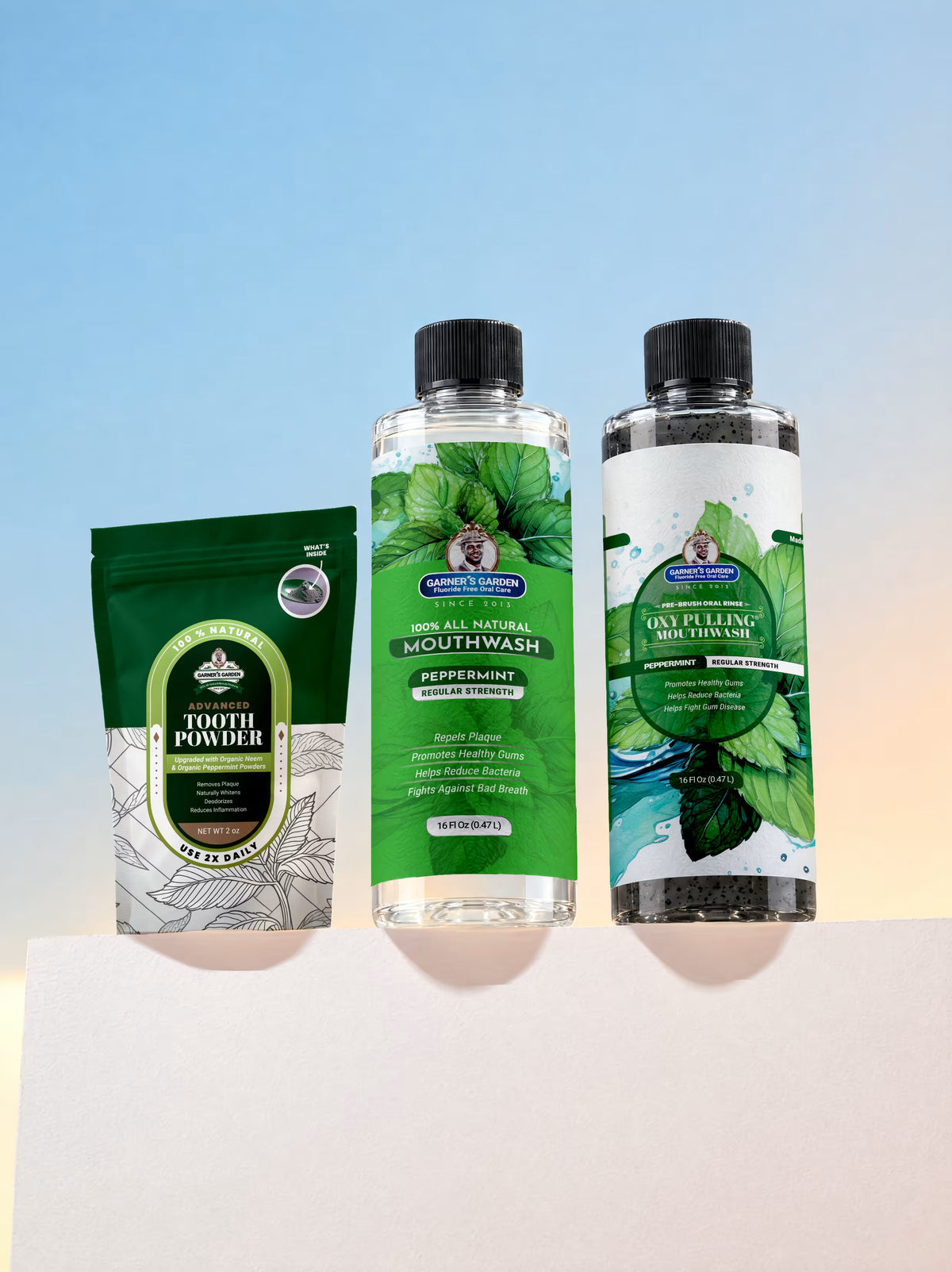
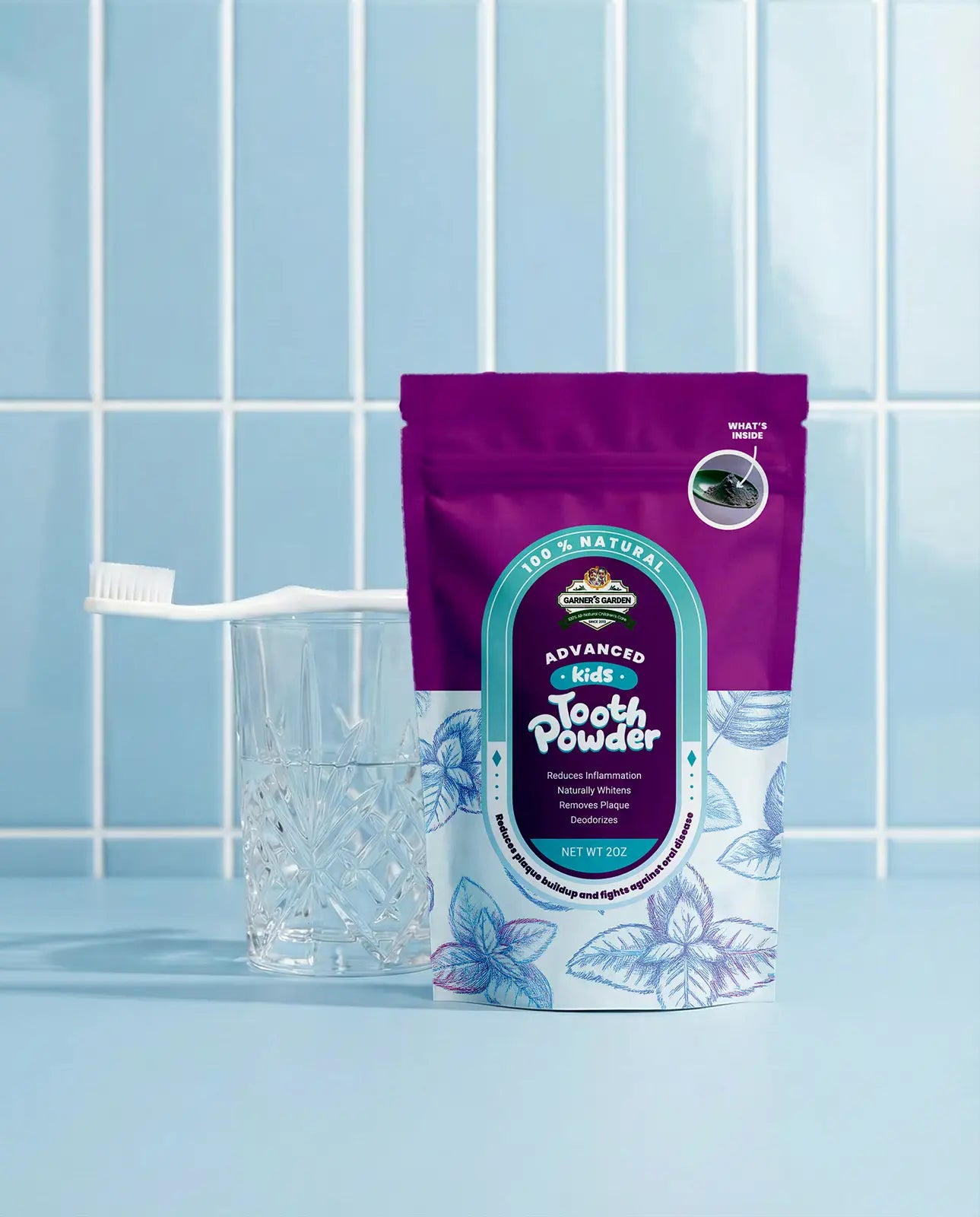
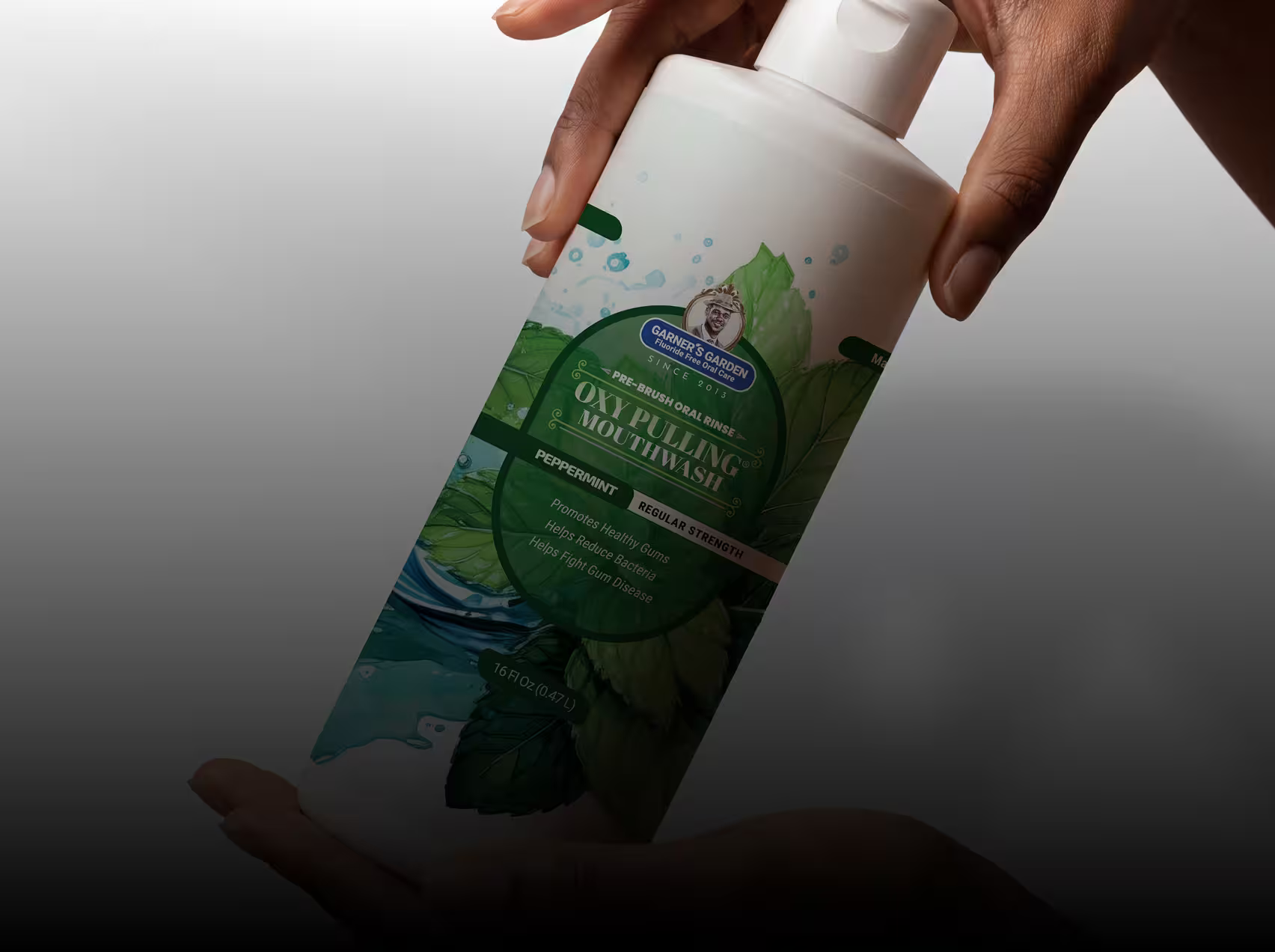
Prefer peppermint flavor? Garner's Garden offers peppermint options in the Oral Care Trio, bringing together Natural Mouthwash, Oxy Pulling, and Tooth Powder. Review the selected formula and label directions with your own dental needs in mind.
 EXPLORE THE PEPPERMINT ORAL CARE TRIO
Sources
- American Dental Association: Mouthrinse (Mouthwash).
- American Dental Association: Home Oral Care.
- Lopes et al. Peppermint essential oil against Streptococcus mutans. J Toxicol Environ Health A. 2024;87:824–835.
- Peier et al. A TRP channel that senses cold stimuli and menthol. Cell. 2002;108:705–715.
- NCCIH: Peppermint Oil—Usefulness and Safety.
- Poison Control: Essential Oils—Poisonous When Misused.
This article is educational. Ask your dentist about persistent symptoms and your individual oral-health needs.
Updated October 1, 2026.
Read more

In this blog we talk about the best way to wash, and how you can use ALL-NATURAL AFRICAN BLACK SOAP to enjoy SMOOTH and ACNE-FREE SKIN today!

Decay-associated bacteria can be shared through saliva, but cavities themselves are not transmitted. Learn how tooth decay develops and how evidence-based daily habits help reduce risk.
1 comment
It’s refreshing to come across articles like this that delve into the potential of natural remedies like peppermint to enhance oral health.
———
Garner’s Garden replied:
Hey VINEVIDA, thanks so much for your kind words! It’s amazing how effective All-Natural ingredients and essential oils like peppermint can be in improving not only your oral health, but your mental and physical health too! Please check out our entire line of All-Natural products, and let us know what you think!
VINEVIDA
Leave a comment
All comments are moderated before being published.
This site is protected by hCaptcha and the hCaptcha Privacy Policy and Terms of Service apply.