


Your “Unscented” Moisturizer May Still Contain Fragrance

THE GARNER’S GARDEN JOURNAL
Your “Unscented” Moisturizer May Still Contain Fragrance
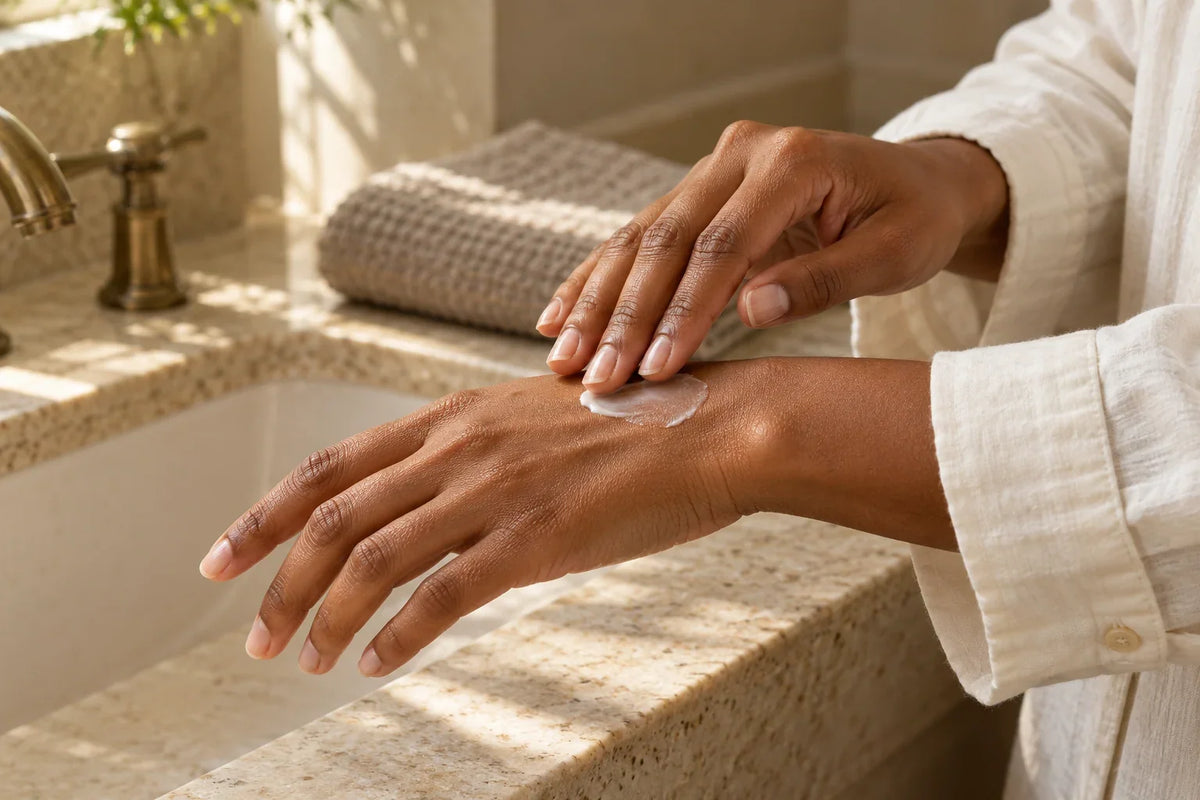
You reach for lotion because your skin needs some care. Maybe your legs feel tight after a shower. Your elbows are rough. Or you’re tired of applying something that leaves you wanting to scratch.
So this time, you pick the unscented one.
That sounds like a sensible place to start. But there’s something we want you to know before you put that bottle back on your bathroom counter: “unscented” does not always mean no fragrance was added.
The FDA explains that some unscented products contain fragrance to cover the smell of other ingredients. You may barely smell the finished product and still be putting a fragrance mixture on your skin. See the FDA’s explanation.
Why put fragrance in something called unscented?
Think about what that word tells you in the store. You open the cap, give it a sniff and get very little scent. It feels like you’ve answered the question.
Fragrance can be used to mask an ingredient’s odor instead of giving the product an obvious perfume. And on a US cosmetic ingredient list, a fragrance mixture can appear under the single word “fragrance,” without naming every component. FDA: fragrance labeling.
That leaves you with a fair question: what is in that mixture?
We think you deserve a clear answer when you’re choosing something to use all over your body. Especially when your skin has already given you a reason to pay attention.
Your skin gets a say, too
An itchy patch. A rash. Flaking that keeps getting your attention.
Those are worth taking seriously. The FDA identifies fragrance as a common cosmetic-allergen class and lists itching, rashes and flaking among possible reaction signs. Those signs alone cannot tell you which ingredient caused them. FDA: cosmetic allergies.
For dry, sensitive skin, the American Academy of Dermatology recommends fragrance-free products and warns that odor-masking ingredients in unscented products can irritate. AAD: dry-skin guidance.
You don’t have to keep brushing off discomfort because a bottle says it’s gentle. If a product irritates your skin, stop using it. If burning, stinging or a rash persists, talk with a dermatologist about the products you’re using.
You went looking for care. It makes sense to ask more of that step than a reassuring word on the front.
Give the back label a closer look

Start with the products you already reach for: body wash, lotion, body cream and the moisturizer beside the sink.
If your goal is to leave added fragrance out, look for “fragrance” or “parfum” on the ingredient list. When the wording leaves you unsure, ask the maker directly whether the formula contains added fragrance, including fragrance used to mask an odor.
Look at named botanical ingredients, too. An essential oil can have a purpose beyond scent, and knowing its name gives you something specific to ask about. Keep any ingredient you already know you react to out of your routine.
Then ask what “no added fragrance” means for the product you’re choosing. It describes what goes into the formula; it doesn’t promise that its raw ingredients have no aroma.
That is a more useful conversation than trying to judge the whole jar with a sniff.
Our answer for this moisturizing step
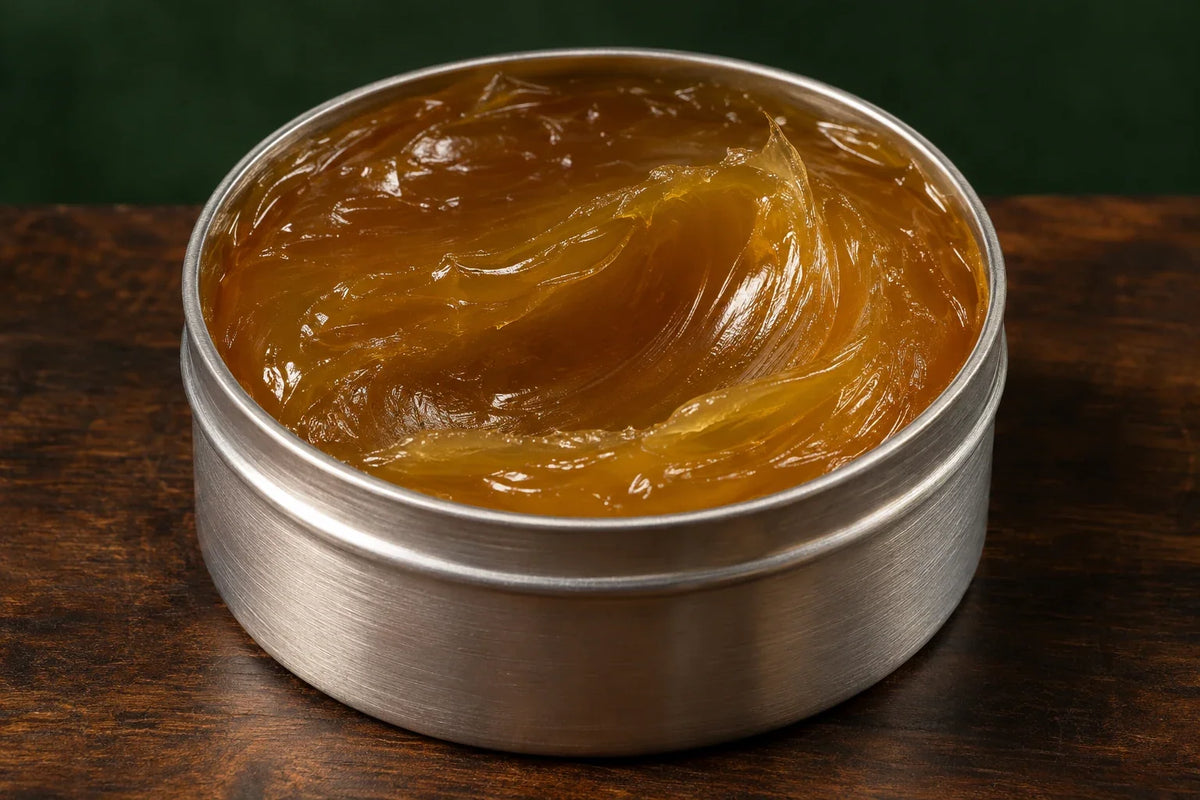
Our Whipped Shea Butter keeps this choice straightforward: shea butter and beeswax, with no added fragrance.
You get a rich, shea-based body moisturizer with the ingredients named plainly. Shea butter also appears in AAD’s list of ingredients to look for in dry-skin moisturizers. See AAD’s ingredient guidance.
Warm a little between your hands, then massage it into clean skin as needed. Those are our directions for this butter.

Your moisturizing step should make sense to you. What’s in it. Why you chose it. How you use it.
We’re happy to put our ingredients in that conversation.
Explore our Whipped Shea Butter.
Explore Whipped Shea ButterRead more
A closer look at petroleum-based wave pomades, buildup, hairline bumps and a conditioning routine with Men’s Hair Balm and Natural Hair Oil.
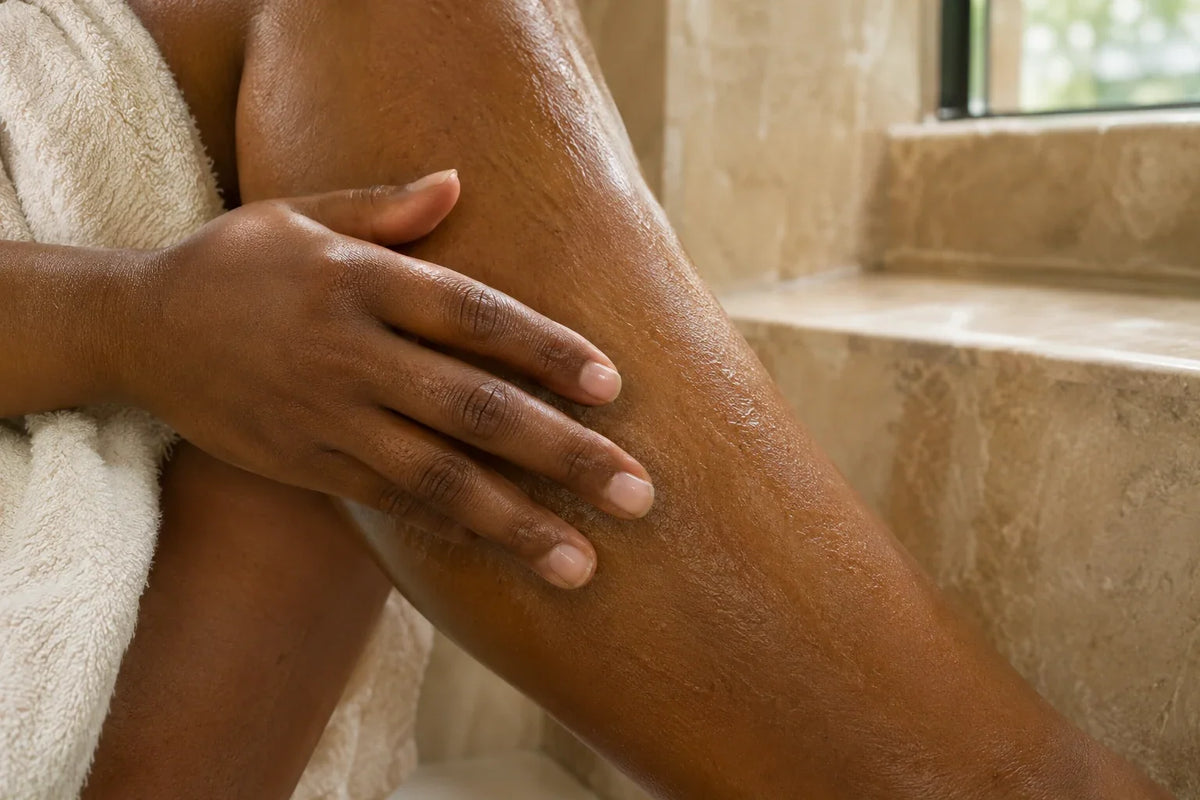
Skin looks shiny but still feels dry? We explain damp-skin timing, moisture retention and the useful role of shea butter.
Leave a comment
All comments are moderated before being published.
This site is protected by hCaptcha and the hCaptcha Privacy Policy and Terms of Service apply.