


 Body Butter - Various Essential Oils
From £10.00


Your cart is empty
A little more from Garner’s Garden. Explore care for your body, hair, and face.
Body Butter - Various Essential Oils
From £10.00
 Body Butter - Natural Fragrance
From £10.00
 Breathe Better Body Wash
From £17.00
 4D Hyaluronic Acid Body Wash | Organic
From £29.00
 Armpit Deodorizing Foaming Wash | Organic | Oxygenated
From £10.00
 Armpit Post Wash Spray | Organic
From £13.00
 Organic Hand Soap
From £16.00
 Organic Intimate Wash For Women | Foaming | H₂O₂
From £10.00
 Magnesium Deodorant Spray
From £16.00
 4D Hyaluronic Moisturizing Layer
From £19.00
 Eczema Relief Spray
From £10.00
 Hot Flash Spray
From £10.00
 Beard Butter | Organic
From £10.00
 Natural Hair Oil
From £10.00
 Intimate Hair Oil
From £10.00
 Hair Balm | Men's | Organic
From £10.00
 Shea Hair Butter
From £10.00
 Natural Aftershave
£15.00
 Argan Oil
£17.00
 4D Hyaluronic Acid Hair Serum
£29.00
 Baobab Oil Shampoo
From £15.00
 Toddler Hair Oil
From £11.00
 Organic Baobab Oil Baby Shampoo
From £10.00
 Organic Baobab Oil Toddler Shampoo
From £10.00
 Natural Lip Balm
From £10.00
 Oil Cleansing Method Charcoal
From £14.00
 Extra Strength Facial Toner
From £10.00
 Facial Toner - Pure
From £10.00
 Organic ACV | Apple Cider Vinegar Toner With Witch Hazel
From £13.00
 African Black Soap Foaming Facial Cleanser | H2O2
From £10.00
 Organic Face Wash
From £11.00
 Hydrosols
From £18.00
 Mineral Exfoliating Scrub
From £10.00
 Activated Charcoal Scrub
From £12.00
 DIY Detox Face Mask
From £12.00
 5lbs African Black Soap
£71.00
Add-ons are one-time purchases. Choose an option to see its exact price.
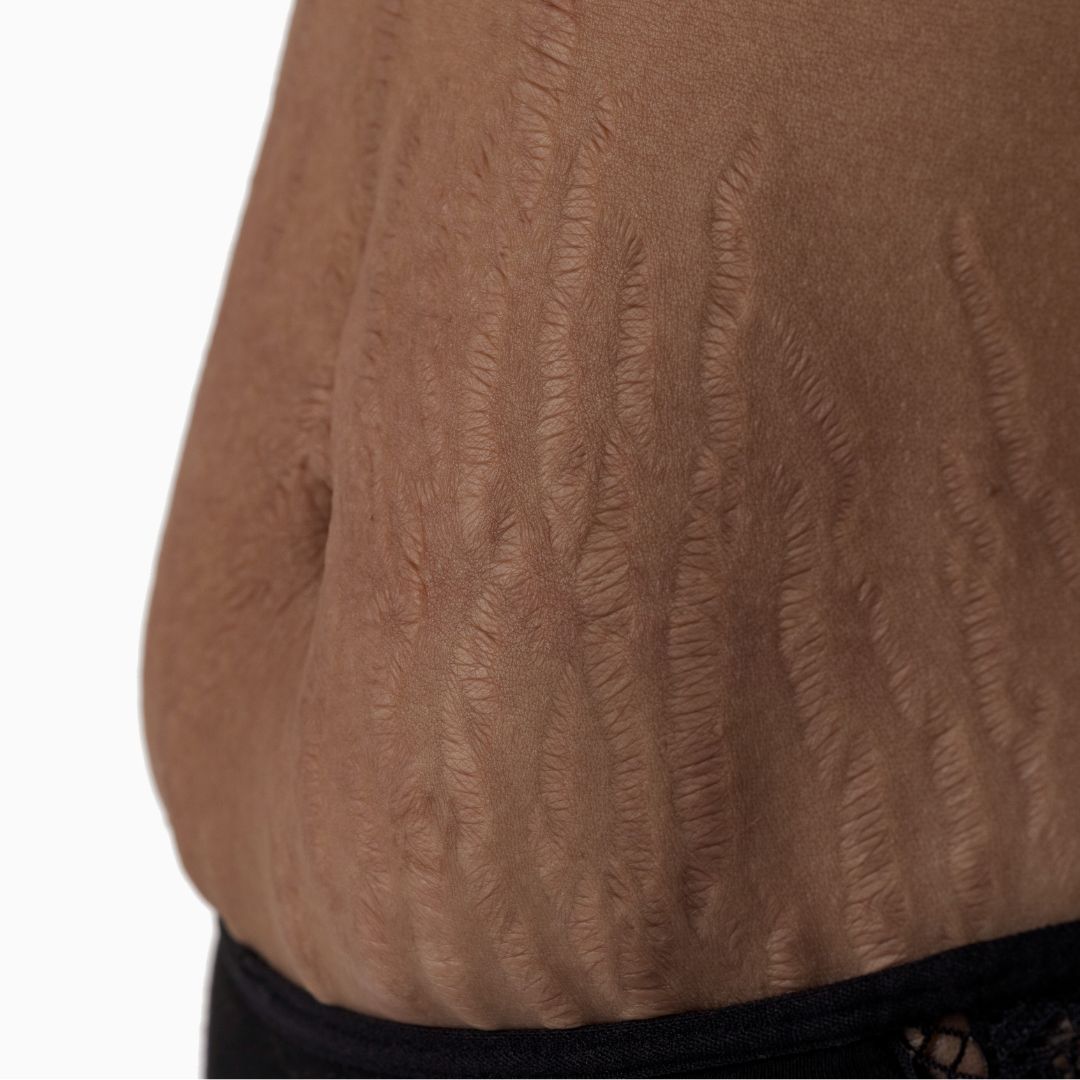

Two words that used to be a death sentence for your skin.
But new breakthroughs are dissecting this dermatological dilemma, and there are NEW PRODUCTS out there that are proven to both prevent and diminish the appearance of these nasty scars.
In this blog we talk about what stretch marks are, who gets them, how to prevent them, and some ways you can restore your skin back to its natural glow today!

Stretch marks are simply scars that appear when your skin stretches or contracts too quickly. And they're incredibly common. (1)
In fact, more than 80% of Americans have stretch marks, including 50-90% of all adult women. (2) (3)
Stretch marks are usually distinct in color, and can irritate your skin and cause itchiness and discomfort over time. In some cases, stretch marks can even be rough to the touch. (4)
A quick way to see if you're developing a stretch mark is to inspect the potential problem area of your skin. If your skin is thinning or beginning to show any sign of discoloration, you may be developing a stretch mark.
Stretch marks are often found on the abdomen, buttocks, and hips, though they can be found anywhere on your body. (6)
Though they're not considered dangerous, for many people stretch marks can be a debilitating part of their everyday lives, affecting their social life and self-image. (4)

Think of your skin as an onion. You have the epidermis, which is your outer layer, then the dermis beneath that. And beneath that are your tissues and important cells.
These tissues and cells are sensitive, and are designed to grow gradually. But when these tissues and cells stretch rapidly and beyond their normal range of motion, the skin thins and becomes inflamed, which affects all layers of your skin.
The changes to your epidermis then affect your melanin, also known as your pigmentation, which leads to stretch marks. (7) (8)
When talking about stretch mark formation, we also need to talk about elastin and collagen.
Stretch marks directly result from the loss of elastin and collagen in your skin. These important proteins are what hold up your skin and maintain your natural firmness and structure. (11) (12)

The reason stretch marks linger is because the elastin and collagen in our skin literally snaps when our skin expands or contracts.
What follows is inflammation and a loss of connective tissue, which leads to the scars we see and identify as stretch marks. (4)
Unfortunately, these proteins are naturally occurring, created by amino acids in your body, which means once they're lost, they're thought to be gone for good. This is what makes stretch marks so problematic. (11) (12)

Although they're commonly associated with pregnant women, anyone can get stretch marks.
They're most commonly found in those experiencing sudden weight loss or weight gain, instant muscle growth, children during growth spurts, those with hormonal changes, and obviously pregnant women. (4)
Not only can many over-the-counter products hurt you, but many medications can actually CAUSE stretch marks, as do any products that stimulate the secretion of cortisol. (1)
Not everyone gets stretch marks, though, and some scientists believe there may be a genetic element to who gets them, though this is still being investigated. (4)

Stretch marks can be difficult to prevent, especially when pregnant or experiencing some kind of natural growth or external stimuli.
However, there are steps you can take to limit your susceptibility to getting stretch marks. These include:
Researchers and scientists have found certain vitamins and minerals, when applied directly onto your skin can actually PREVENT AND ERASE the appearance of stretch marks.


Sources:
